Introduction
Curvo Movement
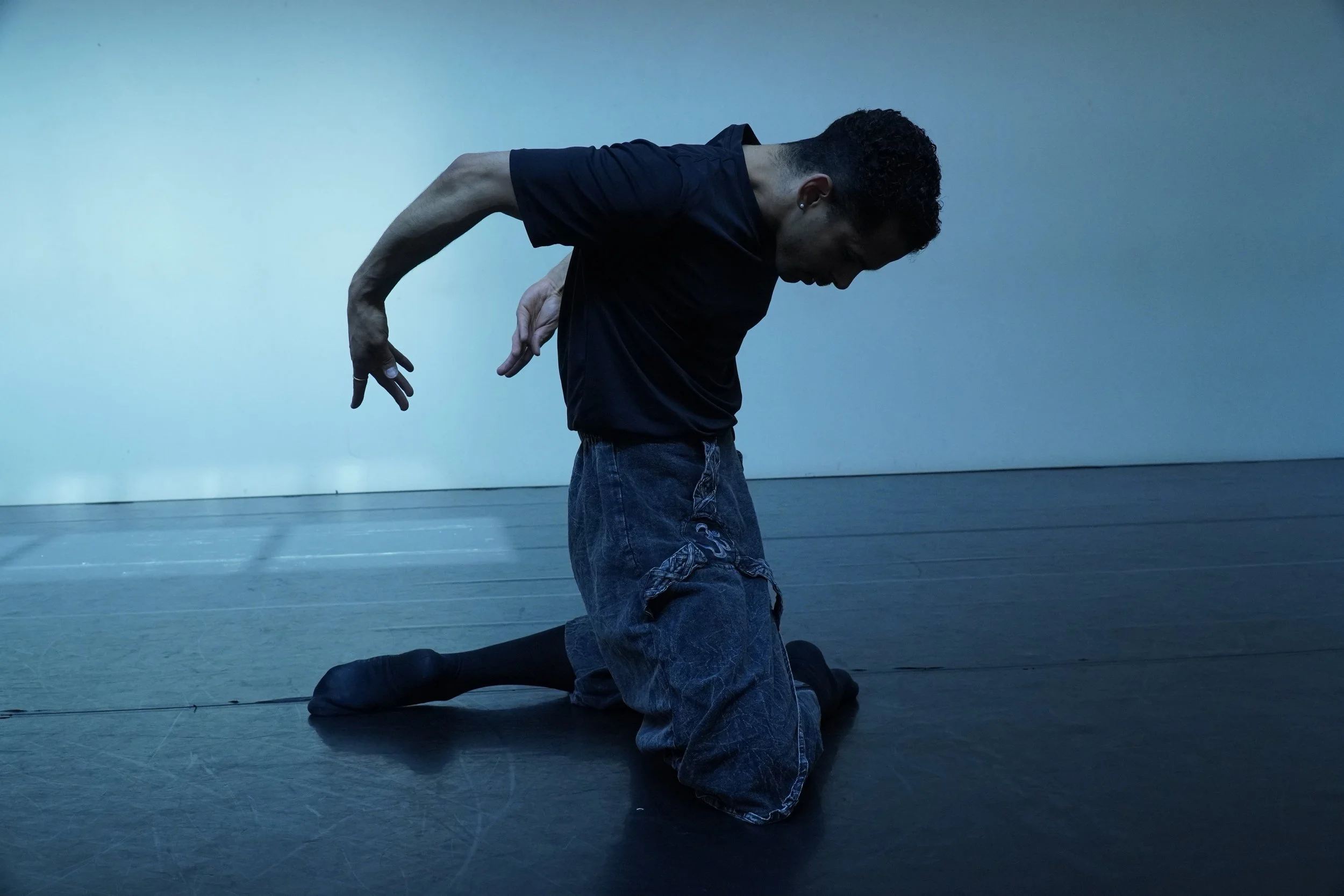
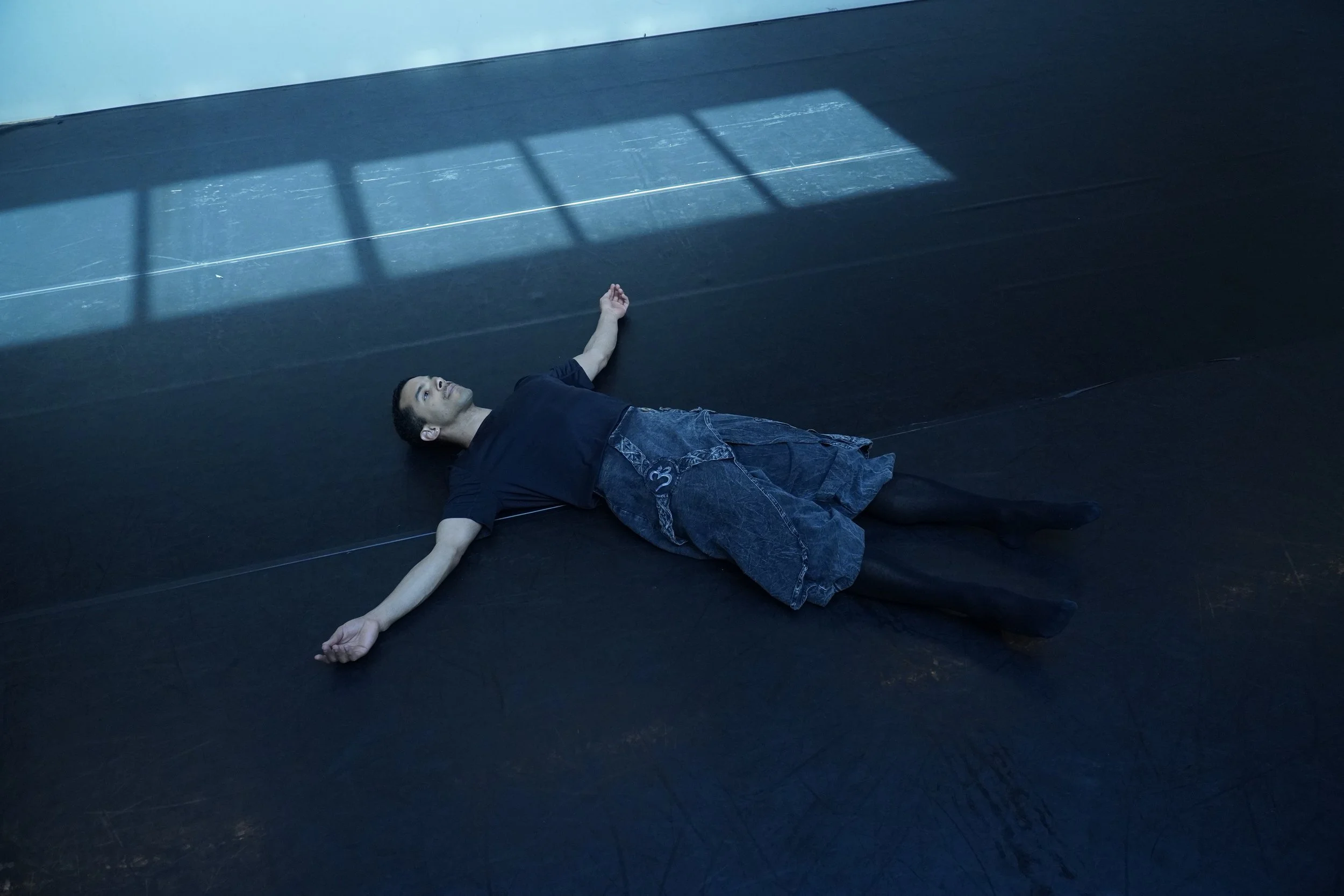
Curvo Movement is a dance class at the intersection of Modern, Contemporary and Afro-Cuban dance, the ideal combination to infuse flow, technique and freedom to your movement inspired in all human circular motions. With the goal to let you move with fluidity and confidence across elements of spiral, undulation, contraction and high release, etc, the class prepares you for diverse combinations that follow musicality, varied movement qualities, dynamics and simple to complex coordinations. This invigorating class will encourage you to work with unity and purpose and explore movement from a functional and an emotional perspective through the barre, centre work, the floor and across the space.
As a former dancer with the Cuban National Dance Company (Danza Contemporánea de Cuba) known as DCC, I draw a lot of inspiration from Cuban modern dance technique to develop the Curvo Movement dance class.
Modern dance
Modern dance is an expressive and dynamic dance form that emerged in the late 19th and early 20th centuries as a rebellion against the rigid rules of classical ballet. It prioritizes freedom of expression, creativity, and individuality, allowing dancers to move more naturally and use their whole body to convey emotion, stories, and messages. Key characteristics include fluid and often barefoot movement, the use of core strength, and a wide range of styles that have evolved over time.
Key principles of modern dance
Rebellion against ballet: It was a conscious rejection of ballet's strict formality, including concepts like pointed toes and outward leg rotation.
Freedom of expression: Dancers are encouraged to express their emotions and individuality, rather than adhering to a set of technical positions.
Whole body movement: It involves the entire body in movement, and dancers may perform a variety of actions, from leaps and turns to floor work and rolling.
Natural and intuitive movement: Movements are often more fluid, grounded, and natural, sometimes initiated from the pelvis or using the entire torso.
Exploration and evolution: Modern dance is not a single style, but an evolving genre with diverse techniques, often incorporating elements from other dance forms and emphasizing improvisation.
Common characteristics
Barefoot performance: Dancers frequently perform barefoot, allowing for a more direct connection to the floor.
Use of gravity: Modern dance often incorporates the principles of "fall and recovery" and can make use of gravity, not just against it.
Emphasis on strength: Despite being fluid, it is often very physical and requires significant core strength, flexibility, and stamina.
Choreographic diversity: Choreographers can create dances that are abstract, lyrical, or inspired by social issues, emotions, or even jazz and folk dance styles.
https://en.wikipedia.org/wiki/Modern_dance
Contemporary dance
Contemporary dance originated as an avant-garde that reacts to classical disciplines. It mixes body expression and movements of the XX and XXI century. In its beginnings, the dancers found themselves immersed in the search for alternatives that would break with the straightness of classical ballet, so they began to perform barefoot and executing movements that transcended the established limits.
Key characteristics
Fusion of styles: It incorporates techniques from multiple dance forms, but also draws from other disciplines like martial arts, yoga, and Pilates.
Emphasis on expression: It prioritizes emotional and artistic expression over perfect form, often telling stories or conveying abstract concepts.
Freedom of movement: It encourages dancers to find their own movement vocabulary, exploring a wide range of ways to move, from weighted and grounded movements to quick, dynamic ones.
Grounded movement: Dancers often use the floor as a partner, incorporating techniques like floor work, falling, and recovery, which contrasts with ballet's emphasis on elevation.
Use of improvisation: Improvisation is often a key tool for choreographers and dancers to explore and create movement organically.
Connection to music and silence: It works with music, but also emphasizes rhythm, breath, and pauses, making silence an integral part of the performance.
Historical context
Contemporary dance emerged in the mid-20th century, evolving from the modern dance movement of the early 1900s.
Modern dance itself was a revolt against the rigidity of ballet, and contemporary dance continued this pursuit of artistic freedom.
Pioneers like Isadora Duncan, Martha Graham, and Doris Humphrey laid the groundwork for the emotional and expressive qualities that contemporary dance is known for.
Cuban modern technique of dance
Cuban modern dance technique, or "la técnica cubana," is a unique contemporary style that blends the strength of European ballet and modern dance with the fluidity of Afro-Cuban and social dances. It is characterized by deep spinal and torso undulations, circular pelvic movements, and a strong emphasis on breath-guided movement. This technique, codified in Havana in the 1960s, is known for its expressiveness, athleticism, and rhythmic complexity, combining elements like contraction and release with polycentric movement where different body parts move independently.
Key characteristics
Fusion of styles: It fuses modern dance techniques, such as the Graham technique's contraction and release, with Afro-Cuban rhythms and popular Cuban social dances.
Movement quality: The style is known for its deep, sensual undulations of the spine and arms, and a broad, circular use of the pelvis, torso, and head.
Breath and rhythm: Movement is guided by the breath. The technique emphasizes polycentric movement, meaning different parts of the body can move in their own rhythm at the same time, often using head and torso isolations.
Athleticism: It is a robust and athletic form that incorporates quick, powerful jumps and complex footwork.
Core strength: The technique develops core strength and precise, clean, but not rigid, movement by using the torso as the foundation.
Expressiveness: The dance is highly expressive and theatrical, balancing intense movement with a degree of synchronization.
Historical context
Codification: La técnica cubana was codified in the 1960s, primarily through the work of Ramiro Guerra and Arnaldo Patterson.
National identity: It was developed as a way to create a unique national dance identity by combining international modern dance influences with local Cuban traditions.
Academic training: The technique is taught in a comprehensive academic setting in Cuba that includes composition, improvisation, partner work, and live drumming in rehearsals.
IN DEPTH:
Cuban modern dance was born in 1959, a new era that initiated diverse cultural processes in the country. The educational system was reformed up to the university level, and various institutions were founded, including the National Ballet of Cuba and the Modern Dance Department of the National Theater of Cuba, which later became the National Modern Dance Ensemble; today, Contemporary Dance.
It is impossible to speak of the beginnings of Cuban dance without mentioning the precursor of the Cuban contemporary dance movement, Ramiro Guerra, or, as he is well known in the country, the father of modern dance; author of a copious body of work on dance technique and founder of today's National Dance of Cuba. His presence in Cuban dance made possible the introduction of modernity as a new movement option.
In the 1960s and 70s, rigorous changes occurred due to political pressure in the country. As a consequence, the cultural field became radicalized, and unfortunately, many artists were sidelined from their activities, among them Maestro Guerra, who was suspended from his position for years and dedicated solely to research. This was the period in which he wrote and recorded his knowledge and experiences in various books. At this time, the aesthetic quality of his works began to be appreciated more for their ideological and political aspirations than for their artistic merit.
Afro-Cuban dances
Afro-Cuban dance is a style of dance that originated in Cuba, blending African rhythms with Spanish influences and deeply connected to religious traditions like Yoruba. Key characteristics include polyrhythms, polycentrism (holding back while moving freely), and expressive, often strong, body movements that tell stories or honour specific spirits called orishas. It forms the foundation for many Cuban social dances, including salsa.
Key characteristics
Polyrhythm: Performing different body parts to different drum rhythms simultaneously.
Polycentrism: An element where movement is held back or "held in" while the body moves freely.
Connection to religion: Many dances are performed to honor the orishas, or spirits, of the Yoruba religion.
Expressive movements: Often features strong, abrupt gestures, fluid torso movements, and rhythmic footwork, which can communicate stories and emotions.
Examples of Afro-Cuban dances